In today’s modern digital landscape, security must be a priority from day one. Incorporating security from the start is the key to resilient systems. This blog explores ten principles for “Secure by Design,” emphasizing security as a core foundation rather than an afterthought in system architecture.
Here’s a breakdown of the ten essential principles:
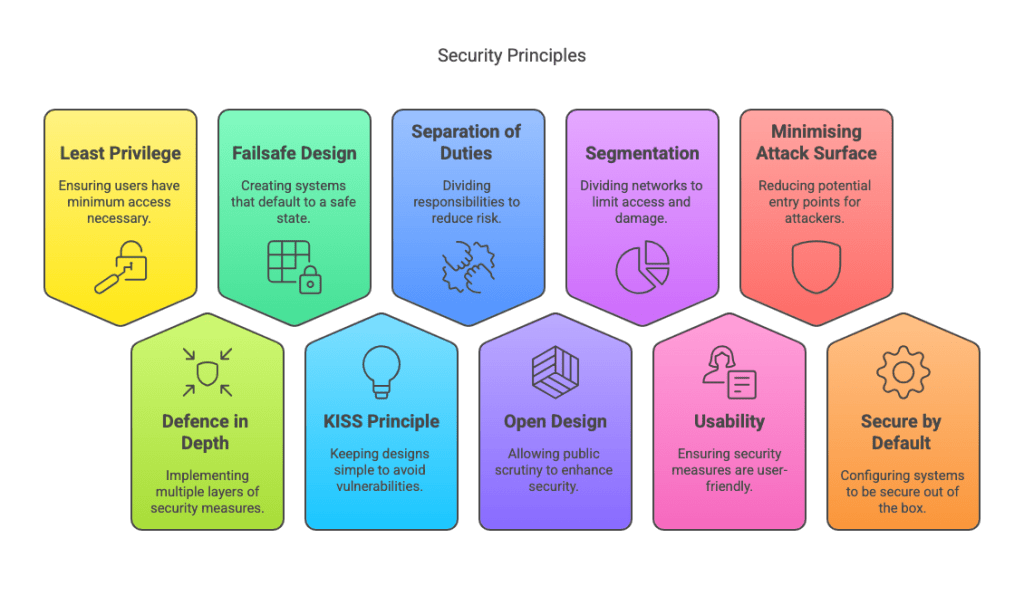
1. Principle of Least Privilege
This concept dictates that individuals should only have access to the information necessary for their specific role. By limiting access, we can significantly reduce the potential attack surface, safeguarding sensitive data.
2. Defence in Depth
Defence in Depth involves creating multiple layers of security throughout the system. Thus by not relying on a single defence mechanism, we can strengthen the overall security posture.
3. Failsafe Design
A well-designed system should incorporate a failsafe mechanism. Systems must be structured to default to a secure state in the event of failure, preventing unauthorized access.
4. KISS Principle (Keep It Simple, Stupid)
Complexity in systems can lead to vulnerabilities. KISS principle advocates for simplicity in design to reduce potential security flaws. Also, Simplicity helps ensure systems operate as intended.
5. Separation of Duties
Separation of duties helps prevent any single individual from having unchecked access or control. This principle is essential in mitigating risks.
6. Open Design
Transparency in system design cultivates trust and enables more thorough security evaluations. This approach contradicts the outdated idea of security through obscurity, where systems depend on keeping their details hidden as a means of protection.
7. Segmentation
Segmentation involves dividing the system into isolated segments, thus enhancing security by limiting the impact of any security weaknesses or attacks within a specific part of the system, preventing them from spreading to other areas. This helps to control and minimize the overall risk to the system.
8. Usability
Security should be user-friendly. If a system is complex or hard to navigate, users might resort to insecure alternatives, putting security at risk.
9. Minimising Attack Surface
A smaller attack surface means fewer opportunities for threats. Minimizing the attack surface is crucial for security. Limiting external interfaces and remote access can significantly reduce vulnerabilities in the system.
10. Secure by Default
Finally, ensuring systems are secure by default entails configuring default settings for safety. Using secure default settings helps block unauthorized access and enhances system integrity from the very start.
Prevent, Protect, and Save: The Value of Secure by Design
Implementing these ten principles of secure by design creates a robust foundation for system security. The goal is to ensure that security measures are integrated at every stage of development, ultimately leading to more resilient and cost-effective systems.

 Cyber Brew with Paarnica
Leave a comment